

Harris Cheema
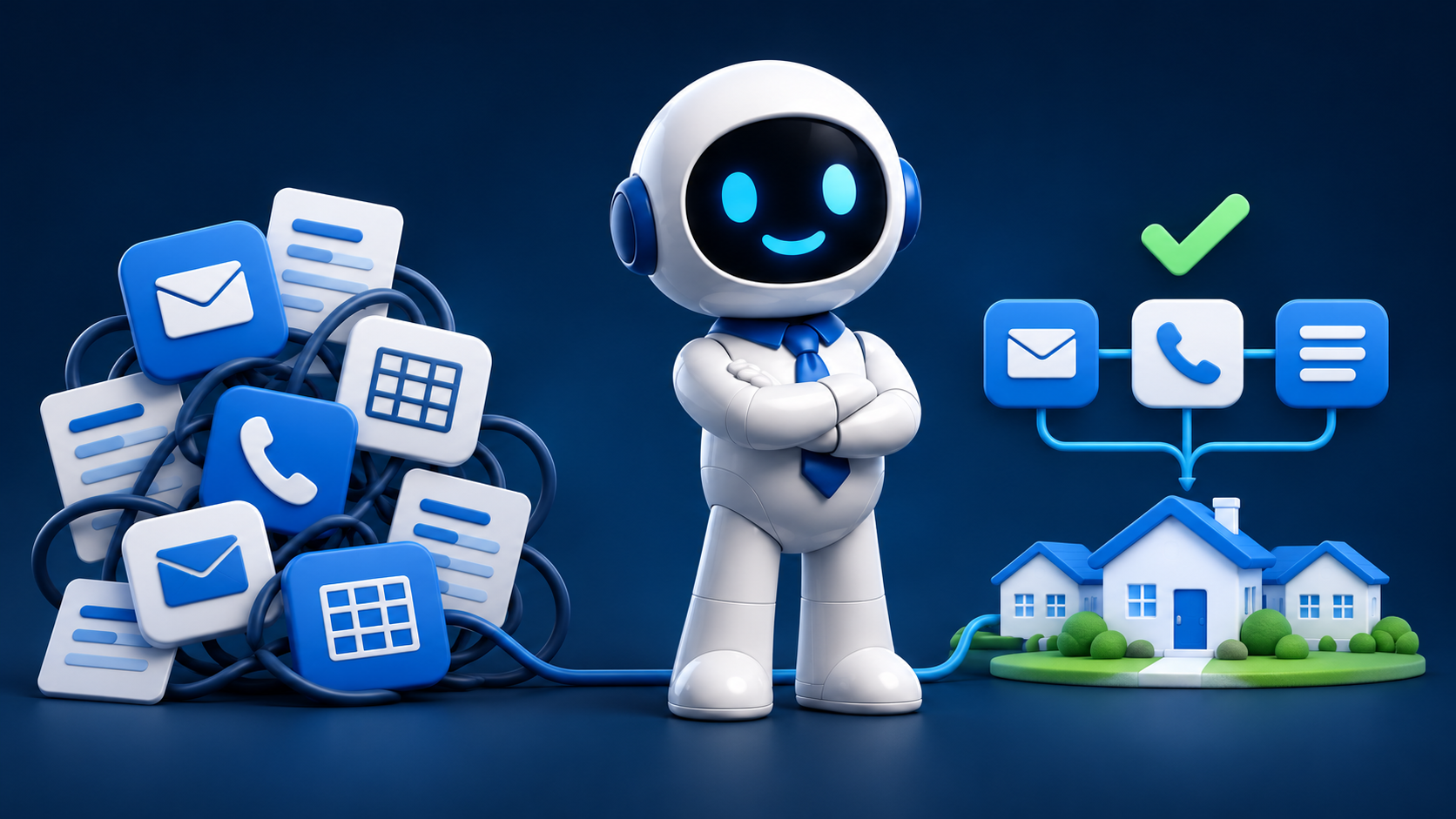
Your management company has a tech stack problem, not a staffing problem, when adding people would mostly add capacity for the same manual steps: typing data into several systems, chasing information across portals, and answering questions your tools should already answer. The clearest sign is that you hired, and response times did not improve. Before you post another job listing, check whether your team is short on hours or losing hours to disconnected software.
It matters because hiring is slow and expensive, and fixing the wrong problem wastes both. In a 2023 survey AvidXchange ran with CAI, 50% of community association management companies named recruiting talent as a top challenge, and 36% named implementing new technologies. Many companies are fighting both battles at once, and adding tools without a plan can make the staffing side worse.
The cost of fragmentation is measurable. In a 2022 study published in Harvard Business Review, workers toggled between applications and websites nearly 1,200 times a day and lost just under four hours a week to reorienting after each switch. The researchers estimated that adds up to about 9% of annual working time.
These eight signs point to a stack problem rather than a people problem:
Look at where the hours go. A true staffing problem means the work itself exceeds capacity even when processes are clean. A stack problem means capacity is being consumed by the process.
Most companies have some of both. The goal is to fix the stack first, so that any hire you make adds capacity for real work.
Start with an inventory, then consolidate around one source of truth. A practical sequence:
For what well connected automation looks like in daily work, see how CAMs are using AI workflows to automate busywork.
STAN AI is built to sit on top of the software you already use rather than become another portal. It pulls information directly from your existing systems, integrates with multiple tools, and builds native functionality where an integration does not exist, so your team keeps working where it already works.
Every deployment is customized. Each community gets its own AI assistant built on the management company's own knowledge base, which means one client's data is structurally separated from every other client's, not just protected by a policy. Homeowners reach it by phone, text, email, or webchat in their own language, and it understands the accents of the people it serves. Routine questions get answered consistently across every channel, and sensitive ones go to your managers.
If staffing pressure is already showing up as burnout, start with our guide to why community association managers are burning out and what actually helps.
What is tech stack fatigue in property management?
It is the exhaustion and lost time that come from managing too many disconnected tools, logins, and portals, which pushes staff back toward manual workarounds.
How many software tools should an HOA management company use?
There is no ideal number. What matters is that every tool reads from one source of truth, usually the PMS, and that each one removes more work than it adds.
Can better software replace hiring a community manager?
Sometimes it can delay a hire by removing repetitive work, but software does not replace the judgment and relationships a manager provides. Fix the stack first so any hire adds real capacity.
How do I know if a new tool will add to tech stack fatigue?
Ask whether it connects to your PMS, whether it removes a login or adds one, and how many manual steps it eliminates. If the vendor cannot answer clearly, it will likely add fatigue.


