

Mehak Khattar
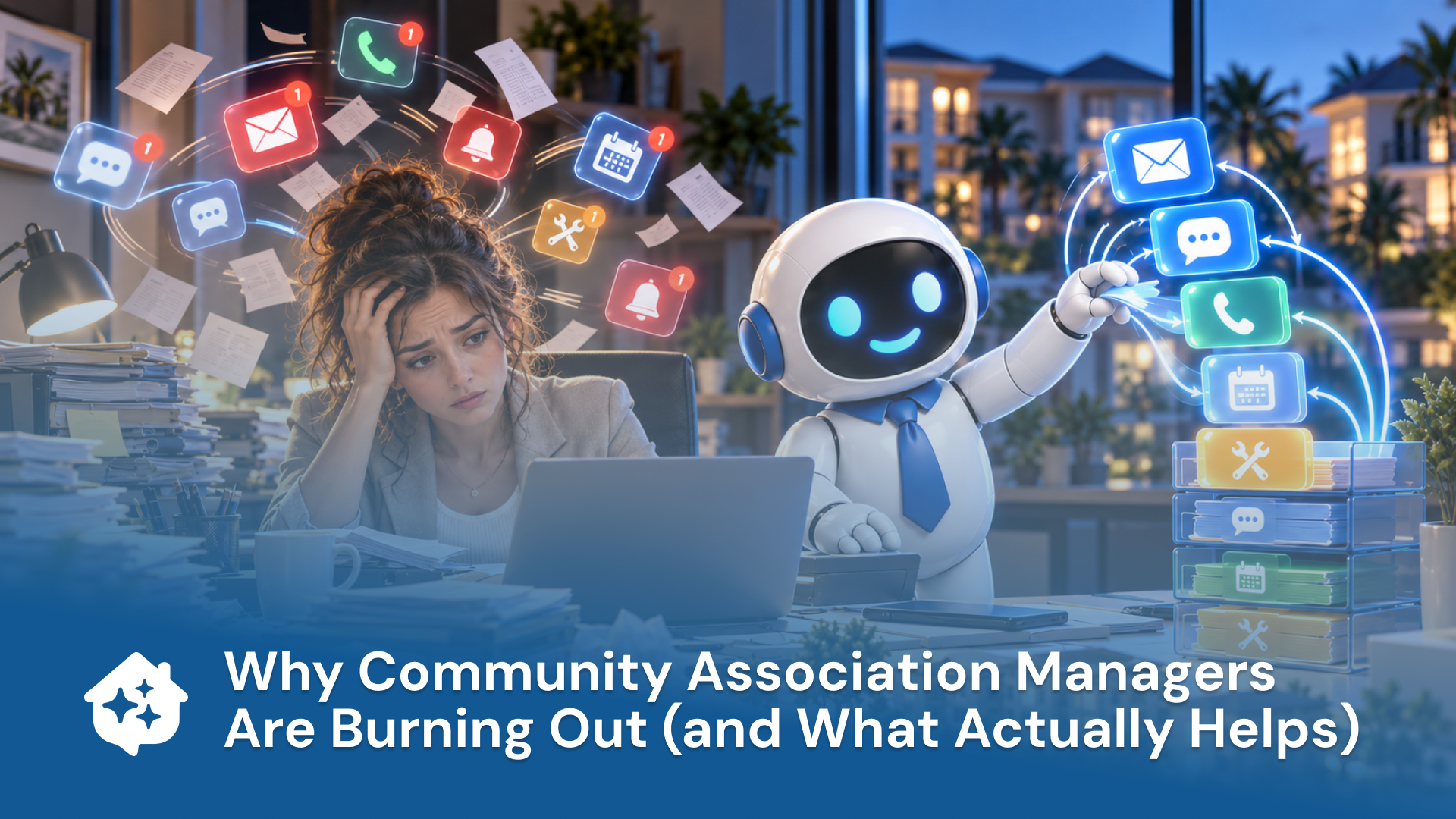
Burnout is the norm in community management, not the exception. In the Foundation's July 2026 Snap Survey, only 7% of respondents reported no burnout at all, while 31% placed themselves in the significant to severe range. The sample was experienced: 65% had worked in the industry for more than 10 years, so this is not a story about new hires struggling to adjust.
The trend is also moving the wrong way. 59% said work related stress has increased over the past three years, and 39% said it increased significantly. Only 19% said stress had gone down.
The biggest driver is people, not paperwork. When the Foundation asked what creates the greatest emotional stress, 74% named difficult homeowner interactions, 52% named difficult board member interactions, and 44% named workload volume. 84% face emotionally charged situations at least several times a week, and 51% face them daily.
Three structural pressures make those interactions harder to absorb:
Burnout turns directly into turnover, and turnover is expensive. Gallup estimates that replacing an employee costs one half to two times that person's annual salary, and calls that a conservative figure. At the U.S. Bureau of Labor Statistics May 2024 median wage of $66,700 for property, real estate, and community association managers, that is roughly $33,000 to $133,000 per departure.
The cost is not only financial. When a manager leaves, local history, vendor relationships, and open issues leave too. Boards notice. In the Foundation's 2026 Homeowner Satisfaction Survey, 75% of residents said their manager provides value and support to the community. That value is personal, and it walks out the door with the person.
Management companies already feel it. In a 2023 survey AvidXchange ran with CAI, 50% of respondents named recruiting talent as a top challenge and 47% named mitigating staff burnout and retention.
The fixes managers ask for are workplace decisions, not personal coping tactics. When the Foundation asked what helps them manage stress, the top answers were vacation and personal time, setting clear boundaries, and flexible work arrangements. When asked what would most improve retention, respondents ranked better compensation first (54%), followed by flexible work, reduced workload, improved board education, and more staff support.
In practice, that points to five moves a management company can make:
For a closer look at the last point, see how CAMs are using AI workflows to automate busywork and signs your company has a tech stack problem rather than a staffing problem.
AI helps when it removes volume and fails when it adds another screen to check. Managers in the Foundation survey were split on whether AI will reduce their stress, and they were clear that human judgment, fact checking, and relationship skills still matter more as routine work gets automated. In the 2023 AvidXchange and CAI survey, 68% agreed that technology helps mitigate burnout on short staffed teams.
The right model is an assistant, not a replacement. The routine questions go to AI. The sensitive, complex, and relationship heavy conversations go to the manager, with context already attached. That split is how STAN AI is built. Each community gets its own custom AI assistant trained on the management company's own knowledge base, so answers reflect that community's documents and rules rather than a generic pool, and one client's information structurally cannot surface in another client's conversations. It answers by voice, text, email, and webchat in the homeowner's language and handles regional accents naturally, so residents do not feel like they are talking to an outsider. After hours calls are triaged against parameters each community sets during implementation, which gives managers the boundary the survey says they need most.
To check whether an AI tool can actually take that volume, start with whether AI can really resolve homeowner questions without a human.
Start by measuring, then fix the biggest source of repeat volume first. Pull one month of inbound calls and emails, tag the ten most common question types, and ask how many could be answered accurately from documents you already have. Then compare the cost of absorbing that volume with people against the alternatives in our AI software versus hiring another CAM cost comparison. If new hires are part of the answer, shorten their ramp with AI assisted training.
What percentage of community association managers experience burnout? In a July 2026 Foundation for Community Association Research survey of 287 professionals, 71% reported moderate to severe burnout and only 7% reported none.
What is the biggest cause of HOA manager burnout? Difficult homeowner interactions, cited by 74% of respondents, followed by difficult board interactions at 52% and workload volume at 44%.
How much does it cost when a community manager quits? Gallup estimates replacement costs of one half to two times annual salary. At the BLS May 2024 median of $66,700, that is roughly $33,000 to $133,000 per departure.
Does AI replace community association managers? No. Well designed AI handles routine, repetitive questions and routes sensitive or complex issues to people, which frees managers for the relationship work residents and boards value most.


